Scaling Wolbachia

Protecting a billion people from dengue

For millennia, the mosquito was always the villain. The deadliest creature on the planet. Responsible for more deaths than all other causes combined.

But what if the mosquito could be the solution?

That’s the promise of a nature-based solution called Wolbachia that is ready to scale globally to protect a billion or more people from dengue, chikungunya, and other diseases spread by Aedes aegypti mosquitoes.

BSH website Images
BSH website Images2
BSH website Images

The Challenge: The dengue crisis

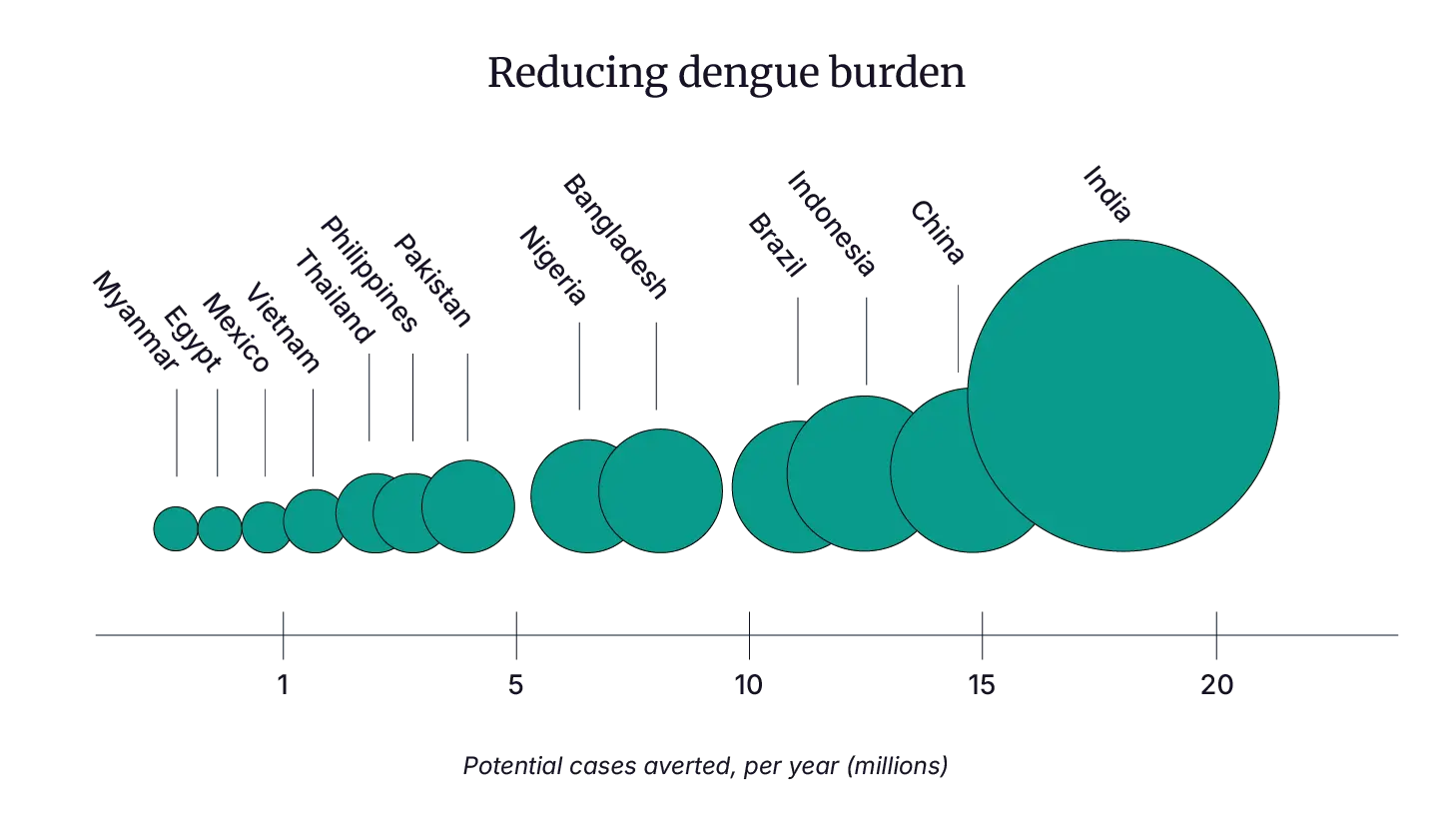
Dengue is exploding due to climate change and urbanization. The global burden has risen tenfold in the past 8 years to an estimated 400 million cases and 4 billion people at risk globally. As a result, the WHO recently declared dengue a “grade 3 emergency,” its highest urgency level.

BSH website Images2

The Opportunity: A golden age of innovations to combat dengue

Powerful new tools are becoming available, including Wolbachia — a harmless bacteria that prevents mosquitoes from carrying dengue and other diseases.

Indonesia recently demonstrated the power of Wolbachia in the city of Yogyakarta. Within a few years of use, dengue cases dropped by 77%. Hospital admissions for dengue fell by 86%. It proved that dengue is not destiny.

Other cities in Colombia, Brazil and Australia have also demonstrated stunning results, achieving 75% to 95% reductions in dengue cases. The technology is ready to be used at a global scale.

Billion-scaling Wolbachia

Despite the promise, Wolbachia has only protected 14 million people in the past 15 years. Our vision is to scale Wolbachia to protect 1 billion people globally in the next 8 to 10 years.

If you want to reach 1 billion people, you need to start in the high-population, high-burden countries like Indonesia, Brazil, Bangladesh, Nigeria, Pakistan, the Philippines, Mexico, and India. 

One of the keys to accomplishing this goal is reducing the cost from the $20-$50 per person protected that we’ve seen in pilot implementations to between $3-$4 per person protected, in line with the WHO’s target pricing. This, paired with product innovations and blended financing, makes global scale-up possible at a time when dengue has become a crisis for many countries. 

How we achieve place-based scale

Indonesia is leading the way. BillionScale is supporting the Government of Indonesia and local partners — led by Universitas Gadjah Mada, Tahija Foundation and the Indonesian Business Council — to implement a plan to scale Wolbachia to 30 cities, protecting more than 30 million people.

This plan would be the first national scale-up of mosquito solutions worldwide. It would cost about $125 million, unlock $1.27 billion in direct economic benefits and health savings over 10 years, and propel Indonesia toward its goal of zero dengue deaths by 2030.

But it is not just about Indonesia. Rather, Indonesia would become a regional center of excellence and manufacturing hub for Wolbachia solutions – creating a model for climate-resilient health and for scaling innovations using blended finance.

With a deal of this size, Wolbachia companies will be able to reduce the costs of their products now and in the future, laying the groundwork for billion-scale impact.

Multiplying catalytic capital

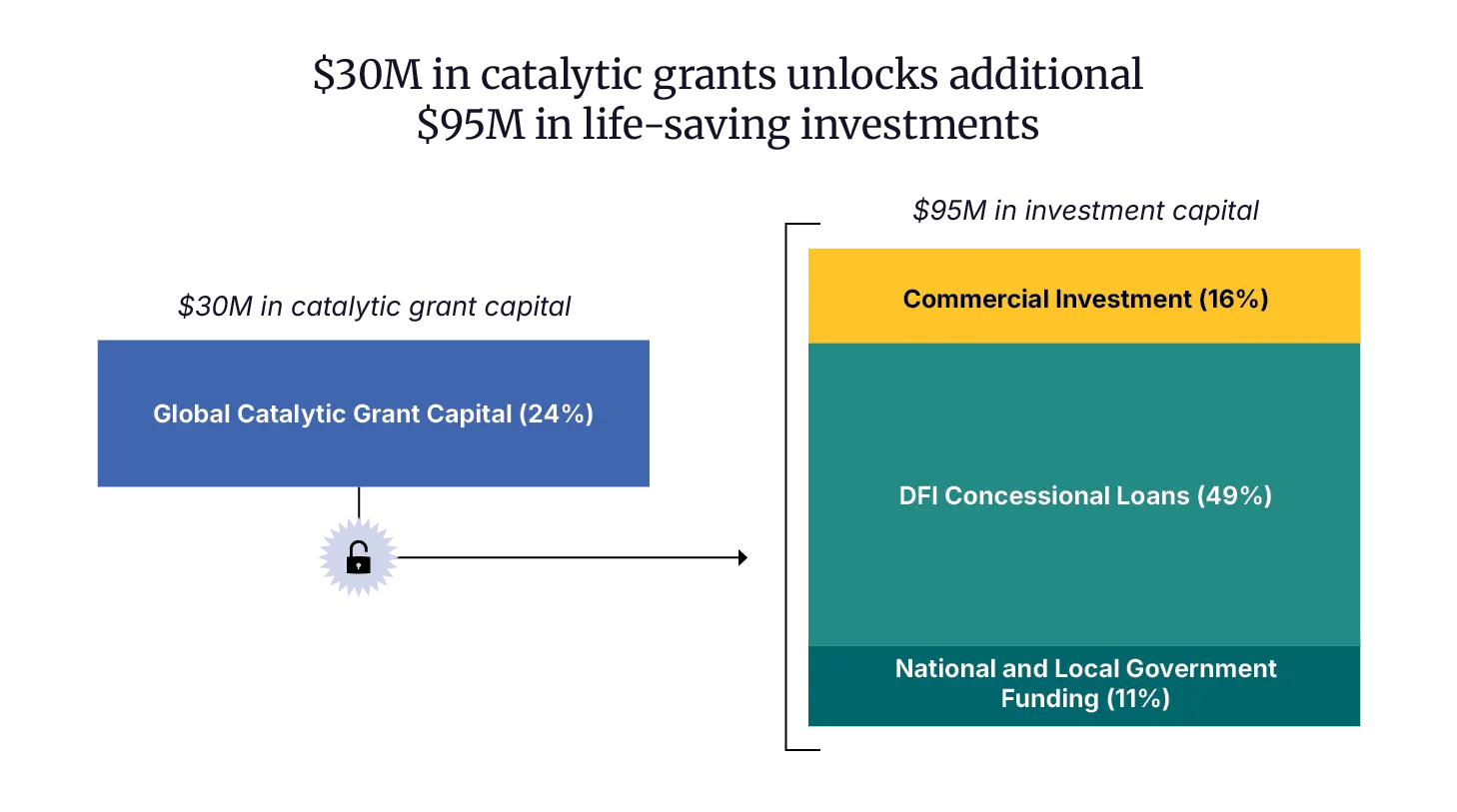
The plan would be financed through municipal budgets, a loan from the Asian Development Bank and commercial investment to build manufacturing. All of this is made possible by $30 million in catalytic grant capital that BillionScale Health and the Indonesian Business Council are working to mobilize through local and global philanthropy and corporate support.

Together, we can protect hundreds of millions of people, save billions in economic and health costs and prove that Indonesia’s goal of zero dengue deaths by 2030 is within reach.

And this is just the first step toward billion-scaling Wolbachia.